Tzfat, Israel
Tzfat and Its Synagogues
צְפַת Tzfat
A mountain town where Jewish mysticism and Jewish law were rewritten in the same generation, in rooms you can still walk into.
Jewish community from the medieval period; kabbalistic centre in the sixteenth century
Visiting Tzfat and Its Synagogues
- What to wear
- Modest throughout the old town: shoulders and knees covered, and a head covering for men in any synagogue.
- Photography
- Outdoors freely. Inside synagogues only where permitted, and not during prayer.
- Cost
- The town is free to walk. Synagogues take donations and some charge a small entry fee.
- When to go
- Thursday, or Friday morning before everything shuts. Spring and autumn: at nine hundred metres the town is cold in winter.
- Access
- Steep stepped lanes throughout. Very little of the old town is step-free.
What to wear at every site in Israel
Etiquette
- DoMen cover their heads inside the synagogues. Shoulders and knees covered for everyone. Wraps and kippot sit by the door.
- DoThere is a mechitza and men and women sit separately. Ask which side if it is not obvious; the question is completely normal.
- AvoidPhotography inside is often not allowed and never during prayer. Look for the sign or ask the gabbai.
- DoThe artists' quarter closes early on Friday and stays shut for Shabbat. Plan the visit around that, not against it.
- DoKabbalah here is a study tradition with years of prerequisites. Shops sell red strings and amulets; the study halls are a separate world and treat them as one.
- DoIf a minyan is forming and a tenth man is needed, you may be asked. Yes and no are both fine answers.
Local tip
Go into a synagogue at the end of a weekday afternoon service. These rooms were built to be full, and empty they tell you almost nothing about themselves.
Hours, prices, access and security arrangements change: check official sources before you go, and follow the instructions of site and security staff. In an emergency, call the local emergency number (in Israel: police 100, ambulance 101, or 112 from a mobile).
The history of Tzfat and Its Synagogues
Why here
Jews expelled from Spain in 1492 and Portugal in 1497 scattered across the Ottoman lands, and a large group settled in Tzfat. By the middle of the sixteenth century the town was a centre of Torah study, kabbalah and the wool trade.
The generation that changed both
Joseph Karo, who compiled the Shulchan Aruch, the code of Jewish law still used today, lived here. So did Isaac Luria, called the Ari, whose teaching reshaped kabbalah, and Shlomo Alkabetz, who wrote Lecha Dodi, sung to welcome Shabbat in synagogues worldwide.
The synagogues you can visit
The Ari Ashkenazi and Ari Sephardi synagogues, the Abuhav and the Alsheich, are small painted rooms, most of them rebuilt after the earthquake of 1837 destroyed much of the town. They are working synagogues rather than museums.
The blue
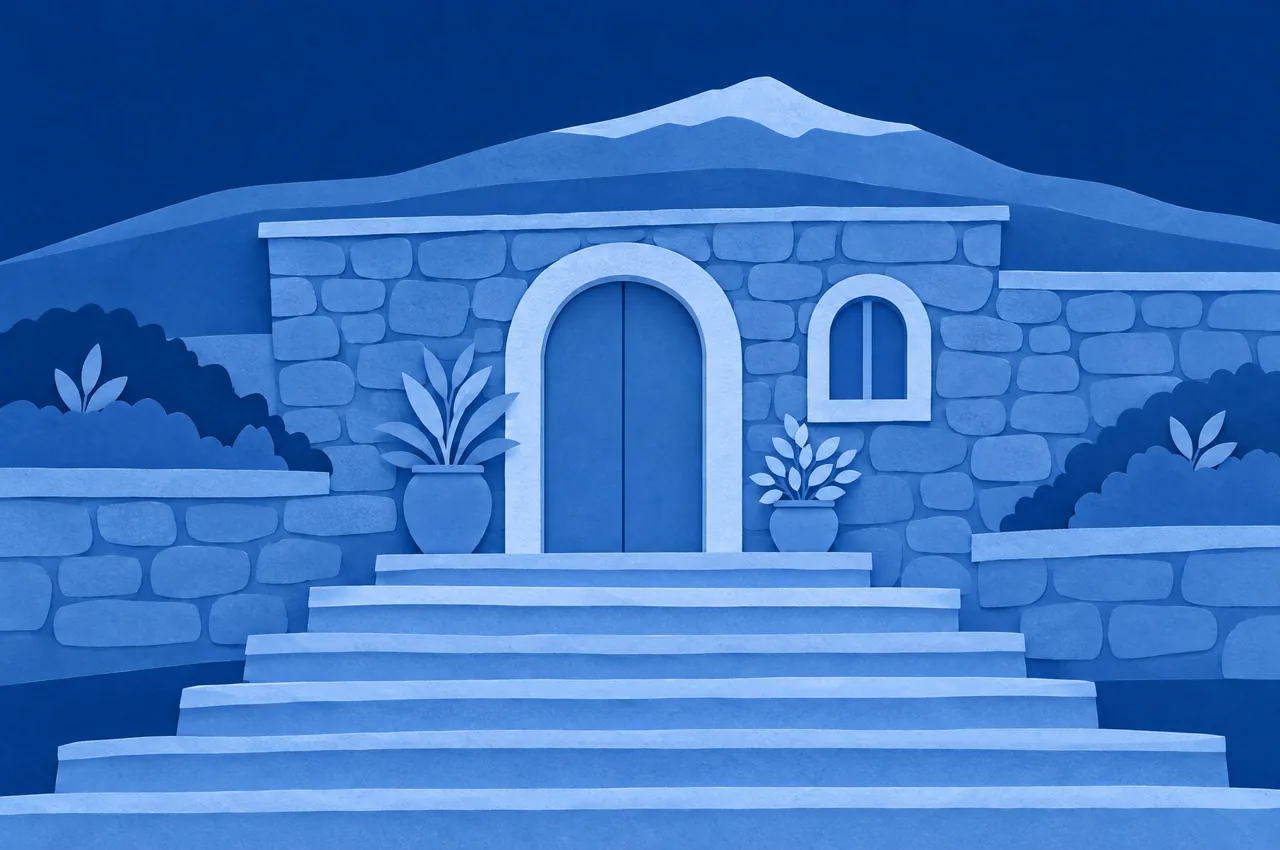
The blue on doors and window frames is local custom, explained variously as the colour of the sky or as a guard against the evil eye. It is custom, not law, and it is not universal even here.
Hebrew for the visit
Phrases
- אֶפְשָׁר לְהִכָּנֵס?efshar lehikanes?May I come in?Ask at the door rather than walking in during prayers. Most communities welcome a respectful visitor.
- אֵיפֹה עֶזְרַת נָשִׁים?eifo ezrat nashim?Where is the women’s section?Orthodox synagogues seat men and women separately, divided by a mechitza. Conservative, Reform and many other communities seat everyone together.
- יֵשׁ מִנְיָן הָעֶרֶב?yesh minyan haerev?Is there a minyan this evening?A minyan is the quorum for communal prayer: ten adult men in Orthodox practice, ten adults of any gender in egalitarian communities.
- אֶפְשָׁר לְצַלֵּם?efshar letzalem?May I take a photograph?Usually fine outside prayer times, and not on Shabbat or festivals, when observant Jews do not use cameras.
- שַׁבָּת שָׁלוֹםshabbat shalomPeaceful ShabbatUsed from Friday morning until Saturday night, to anyone. Ashkenazim also say gut Shabbes, in Yiddish.
Words
- בֵּית כְּנֶסֶתbeit knessetsynagogueLiterally “house of gathering”. The Knesset, Israel’s parliament, shares the root.
- סִדּוּרsiddurprayer bookFrom “order”. Ashkenazi, Sephardi and Mizrahi rites differ in wording and in sequence.
- תְּפִלָּהtefilaprayer
- מְחִיצָהmechitzathe partition separating men and womenStandard in Orthodox synagogues. Conservative, Reform and most Reconstructionist congregations seat men and women together.
- שַׁבָּתShabbatShabbat, the seventh dayFrom evening on Friday to nightfall on Saturday. The root means to stop or to cease.
- קָדוֹשׁkadoshholy; set apartFeminine: קְדוֹשָׁה. The root carries a sense of being separated for a purpose.
Visiting a Synagogue: all the phrases · All 157 phrases in the phrasebook
Last updated:
OrQuest is coming to iPhone and Android.
One email, when OrQuest reaches the app stores.