Toledo, Spain
Santa María la Blanca
בֵּית הַכְּנֶסֶת הַגָּדוֹל, טוֹלֶדוֹ Beit HaKnesset HaGadol, Toledo
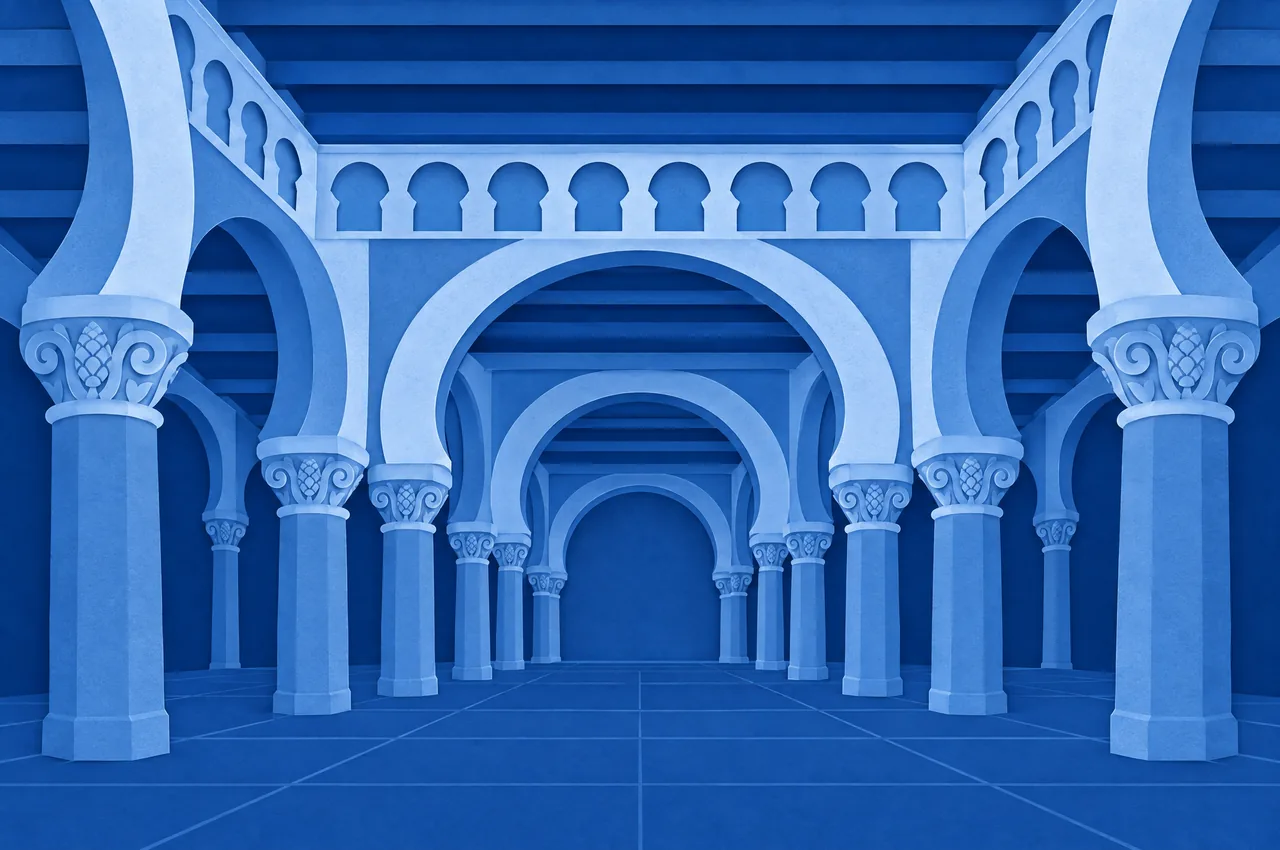
Five aisles of horseshoe arches on whitewashed brick piers, built as a synagogue, taken as a church and used for prayer by nobody now.
Late twelfth century; a church from the early fifteenth
Visiting Santa María la Blanca
- What to wear
- Anything. No religious dress code applies here.
- Photography
- Usually allowed without flash. Check the notice at the desk, which is the current rule.
- Cost
- A small entry fee at the door. Toledo also sells a combined bracelet ticket covering this and several other monuments, which pays for itself quickly.
- When to go
- Mid-morning on a weekday, or the last hour before closing. The city fills with day-trippers from Madrid between about eleven and four.
- Access
- A step or two at the entrance and a flat interior. The lane outside is cobbled and slopes.
Etiquette
- DoIt is a monument rather than a place of worship for anyone. No dress code applies and no head covering is expected.
- DoStand in an outer aisle rather than down the middle. The arcades only line up into rows when you look across them.
- AvoidDo not touch or lean on the piers. The whitewash and the carved capitals are the fabric of the building, not a surface.
- DoThe room is small and it echoes. One group fills it completely, so waiting five minutes outside for one to leave changes the whole visit.
- DoThe site is run by the archdiocese and staffed accordingly. Questions about the history of the building are welcome at the desk.
Local tip
Look up at the capitals as you walk each aisle. The carved cones and scrollwork change from pier to pier, which is easy to miss in a room this white.
Hours, prices, access and security arrangements change: check official sources before you go, and follow the instructions of site and security staff. In an emergency, call the local emergency number (in Israel: police 100, ambulance 101, or 112 from a mobile).
The history of Santa María la Blanca
How old, exactly
It is often called the oldest synagogue building still standing in Europe. The usual date is about 1180, from a tradition tying it to Joseph ben Shushan, and it was the principal synagogue of Toledo. Parts of it have been reworked since, specialists argue over how much, and the claim depends on how you count rebuilding.
Islamic form, Jewish use, Christian end
The building is Almohad in style: horseshoe arches carried on octagonal brick piers, capitals carved with pine cones and scrollwork, everything under whitewash. It was raised for Jewish prayer, in the architecture of the Muslim world, inside a Christian kingdom. Toledo is the standard example of that arrangement, and it was never as untroubled as the phrase “city of three cultures” suggests.
The conversion
It stopped being a synagogue in the early fifteenth century and was consecrated as a church. Tradition attaches this to the preaching of Vincent Ferrer, either in the aftermath of the anti-Jewish violence that swept Castile and Aragon in 1391 or around 1411. The documents are thin and the year is genuinely disputed.
Barracks, store, monument
Afterwards it served as a chapel, a refuge, a barracks and a storehouse before being protected as a monument in the nineteenth century. It belongs to the Catholic Church today and opens as a monument. Nobody prays in it, and Jewish organisations have asked more than once for that to be reconsidered.
Hebrew for the visit
Phrases
- כַּמָּה זֶה עוֹלֶה?kama ze oleh?How much does this cost?Hebrew says a price “rises”. The same verb means to go up and to immigrate to Israel.
- אֶפְשָׁר?efshar?May I?A one-word request. Point at what you mean, add bevakasha, and it is a complete polite sentence.
- אֵיפֹה הָעִיר הָעַתִּיקָה?eifo hair haatika?Where is the Old City?In Jerusalem this means the walled quarter around the Kotel. Akko, Jaffa and Tzfat have old cities too.
- תּוֹדָה רַבָּהtoda rabaThank you very muchרַבָּה is feminine because תּוֹדָה is a feminine noun. Adjectives always agree with their noun.
Words
- בֵּית כְּנֶסֶתbeit knessetsynagogueLiterally “house of gathering”. The Knesset, Israel’s parliament, shares the root.
- אֶבֶןevenstoneJerusalem stone is required by city building rules, which is why the city reads as one colour.
- עַתִּיקatikancientFeminine: עַתִּיקָה, as in הָעִיר הָעַתִּיקָה.
- גָּלוּתgalutexile; the diasporaA charged word. Many prefer תְּפוּצוֹת (tefutzot), dispersion, for Jewish life outside Israel.
- הָעִיר הָעַתִּיקָהhaIr haAtikathe Old CityBoth the noun and the adjective take the definite article. That doubling is the rule in Hebrew.
Please, Thanks, Sorry: all the phrases · All 157 phrases in the phrasebook
Last updated:
OrQuest is coming to iPhone and Android.
One email, when OrQuest reaches the app stores.