Marrakesh, Morocco
The Mellah and Slat al-Azama
הָרוֹבַע הַיְּהוּדִי שֶׁל מָרָקֶשׁ HaRova HaYehudi shel Marakesh
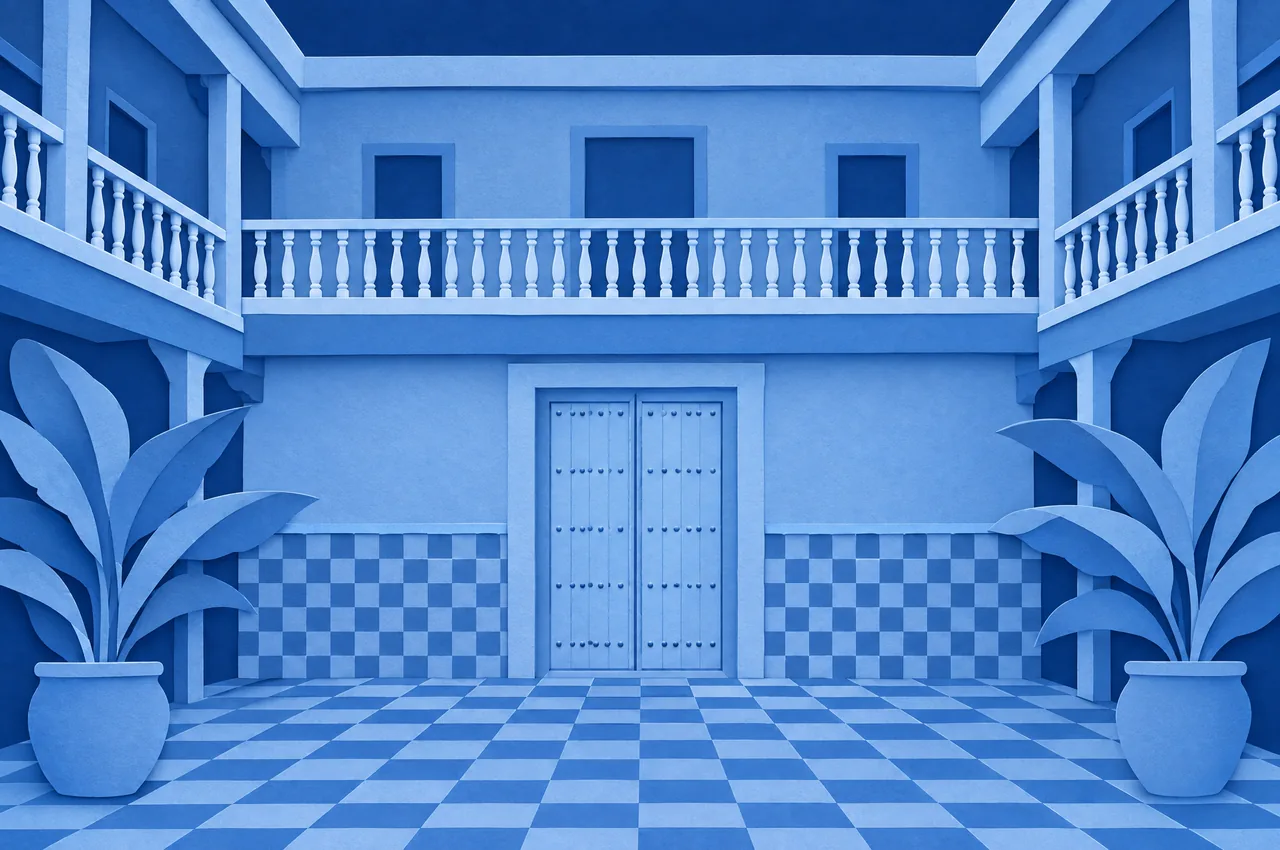
The walled Jewish quarter beside the royal palace, a blue-and-white synagogue courtyard inside it and a cemetery of whitewashed graves behind.
Quarter laid out in the 1550s; the synagogue traced by tradition to the exiles of 1492
Visiting the Mellah and Slat al-Azama
- What to wear
- Shoulders and knees covered for everyone, in the quarter as much as in the synagogue. Light long sleeves beat a shawl in the heat.
- Photography
- The courtyard and the prayer room are usually fine. People, stalls and homes only after asking.
- Cost
- A small entry charge or donation at the synagogue and again at the cemetery. Carry cash in dirhams, in small notes.
- When to go
- Morning, before the heat and while the market is working. Avoid Friday afternoon and Saturday, when the Jewish sites are shut.
- Access
- Narrow lanes, uneven paving, and thresholds and steps at the synagogue. Very little here was built with wheels in mind.
Etiquette
- DoMen cover their heads in the synagogue. A basket of kippot sits by the door with a donation box beside it.
- DoThe mellah is a lived-in quarter with a working market, not a heritage zone. Ask before photographing people, stalls and doorways, exactly as in the rest of the medina.
- AvoidDo not turn up at the synagogue on Shabbat expecting to be shown round. From Friday afternoon through Saturday it is closed to visitors, and Jewish festivals close it too.
- DoGuides attach themselves at the gates. Agree what you are paying and what you are getting before you walk anywhere with anyone.
- DoDuring Ramadan the streets are quiet by day and full after dark, and eating or drinking in the open before sunset is noticed. Plan around that rhythm rather than against it.
- DoThe Miaara cemetery is a short walk away and has a caretaker at the gate. A donation is the normal courtesy, and men cover their heads there as well.
Local tip
Sit down in the courtyard for a few minutes before you go into the prayer room. The tilework, the rooms around the edge and the market noise coming over the wall are the geography of a mellah in one square.
Hours, prices, access and security arrangements change: check official sources before you go, and follow the instructions of site and security staff. In an emergency, call the local emergency number (in Israel: police 100, ambulance 101, or 112 from a mobile).
The history of the Mellah and Slat al-Azama
What a mellah was
A mellah is a walled Jewish quarter in a Moroccan city, with gates of its own. The first was created in Fez in 1438 and Marrakesh followed in the 1550s under the Saadian sultan Abdallah al-Ghalib. The name comes from the Arabic word for salt, most plausibly from the ground the Fez quarter stood on. The story that it refers to salting the heads of executed rebels is folklore.
Protection and its price
Jews in Morocco were dhimmis: a protected non-Muslim population, paying a poll tax and living under restrictions on dress, on riding and on where they could build. The Marrakesh mellah sits beside the royal palace, which was not an accident, because protection came from the sultan. It also meant crowding, gates that could be closed on you, and a community whose safety rose and fell with the strength of the ruler.
The synagogue of the expelled
Slat al-Azama, the Lazama, is traced by tradition to Jews expelled from Spain in 1492, and its name is understood as the synagogue of the expelled. The quarter around it was laid out later, so that date belongs to the community rather than to these walls. What you walk into is a prayer room on a tiled courtyard, rebuilt more than once, and still in use.
A community that left
Estimates vary, but something in the region of a quarter of a million Jews lived in Morocco around 1948, and a few thousand remain, most of them in Casablanca. They left across the 1950s and 1960s for Israel, France and Canada, for reasons tangled together: the founding of Israel and the wars around it, decolonisation, economic pressure and violence such as the riots at Oujda and Jerada in June 1948 in which dozens of Jews were killed. The synagogue, the Miaara cemetery and the quarter have been repaired in recent years under a state programme for Moroccan Jewish heritage, and the historic name of the quarter was formally returned to it.
Hebrew for the visit
Phrases
- אֶפְשָׁר לְהִכָּנֵס?efshar lehikanes?May I come in?Ask at the door rather than walking in during prayers. Most communities welcome a respectful visitor.
- אֶפְשָׁר לְקַבֵּל כִּפָּה?efshar lekabel kipa?May I have a kippah?A basket of kippot usually sits by the door. Men and boys cover their heads in almost every synagogue.
- כַּמָּה זֶה עוֹלֶה?kama ze oleh?How much does this cost?Hebrew says a price “rises”. The same verb means to go up and to immigrate to Israel.
- תּוֹדָה רַבָּהtoda rabaThank you very muchרַבָּה is feminine because תּוֹדָה is a feminine noun. Adjectives always agree with their noun.
- הַכֹּל סָגוּר בְּשַׁבָּת?hakol sagur beshabbat?Is everything closed on Shabbat?Most shops close from Friday afternoon. Tel Aviv, Haifa and Arab towns stay much busier, and Jerusalem goes very quiet.
Words
- בֵּית כְּנֶסֶתbeit knessetsynagogueLiterally “house of gathering”. The Knesset, Israel’s parliament, shares the root.
- שׁוּקshukmarketMachane Yehuda in Jerusalem and the Carmel Market in Tel Aviv are both simply “the shuk”.
- שַׁעַרshaargateThe gates of the Old City walls all carry names built on this word.
- חוֹמָהchomawall (of a city)A defensive wall. An interior wall of a room is קִיר (kir).
- גָּלוּתgalutexile; the diasporaA charged word. Many prefer תְּפוּצוֹת (tefutzot), dispersion, for Jewish life outside Israel.
- עֲלִיָּהaliyamoving to Israel; being called up to the TorahBoth senses come from “going up”. You go up to the land, and up to the reading desk.
Visiting a Synagogue: all the phrases · All 157 phrases in the phrasebook
Last updated:
OrQuest is coming to iPhone and Android.
One email, when OrQuest reaches the app stores.