New York, United States
The Eldridge Street Synagogue
קְהַל עֲדַת יְשׁוּרוּן Kehal Adat Yeshurun
The first great synagogue built in America by immigrants from Eastern Europe, shut for half a century and open again with a new east window.
Built 1886 to 1887; sanctuary closed by the 1950s and reopened in 2007
Visiting the Eldridge Street Synagogue
- What to wear
- Ordinary clothes with shoulders covered. Head covering for men in the sanctuary, provided at the door.
- Photography
- Allowed in the sanctuary outside services. Not during prayer.
- Cost
- A museum admission with reduced rates, plus a pay-what-you-wish period each week. Closed on Saturdays and on Jewish holidays.
- When to go
- A weekday morning tour, when the group is small enough to ask questions, and when the sun is still on the east window.
- Access
- There are steps at the historic entrance and the sanctuary is up a level. Ask about the step-free route when you book.
Etiquette
- DoMen cover their heads in the sanctuary. Kippot are at the door.
- DoMost visits are guided and the guides know this building in detail. Ask them things; that is what the hour is for.
- AvoidDo not wander into the small prayer room downstairs. It is a working room and it is not part of the tour.
- DoPhotography in the sanctuary between tours is generally welcome. Services are a different matter.
- DoThe museum keeps Shabbat and festival closures. Saturday is not a visiting day and Sunday is the busiest one.
- DoThe neighbourhood around the door is Chinatown now. That layering is part of the story of the block, and the walk to Canal Street is worth twenty minutes.
Local tip
Ask the guide to point out where the restorers deliberately left the old surface alone. Seeing the ruined and the repaired condition in one room is the whole argument of the place.
Hours, prices, access and security arrangements change: check official sources before you go, and follow the instructions of site and security staff. In an emergency, call the local emergency number (in Israel: police 100, ambulance 101, or 112 from a mobile).
The history of the Eldridge Street Synagogue
One neighbourhood, two million people
Between about 1880 and 1924 more than two million Jews left Eastern Europe for the United States, and the largest share of them landed in the Lower East Side of Manhattan. The immigration act of 1924 closed the door. Totals vary with the years you count, but the density of these blocks in those decades is not in dispute: it was among the most crowded ground on earth.
A building of their own
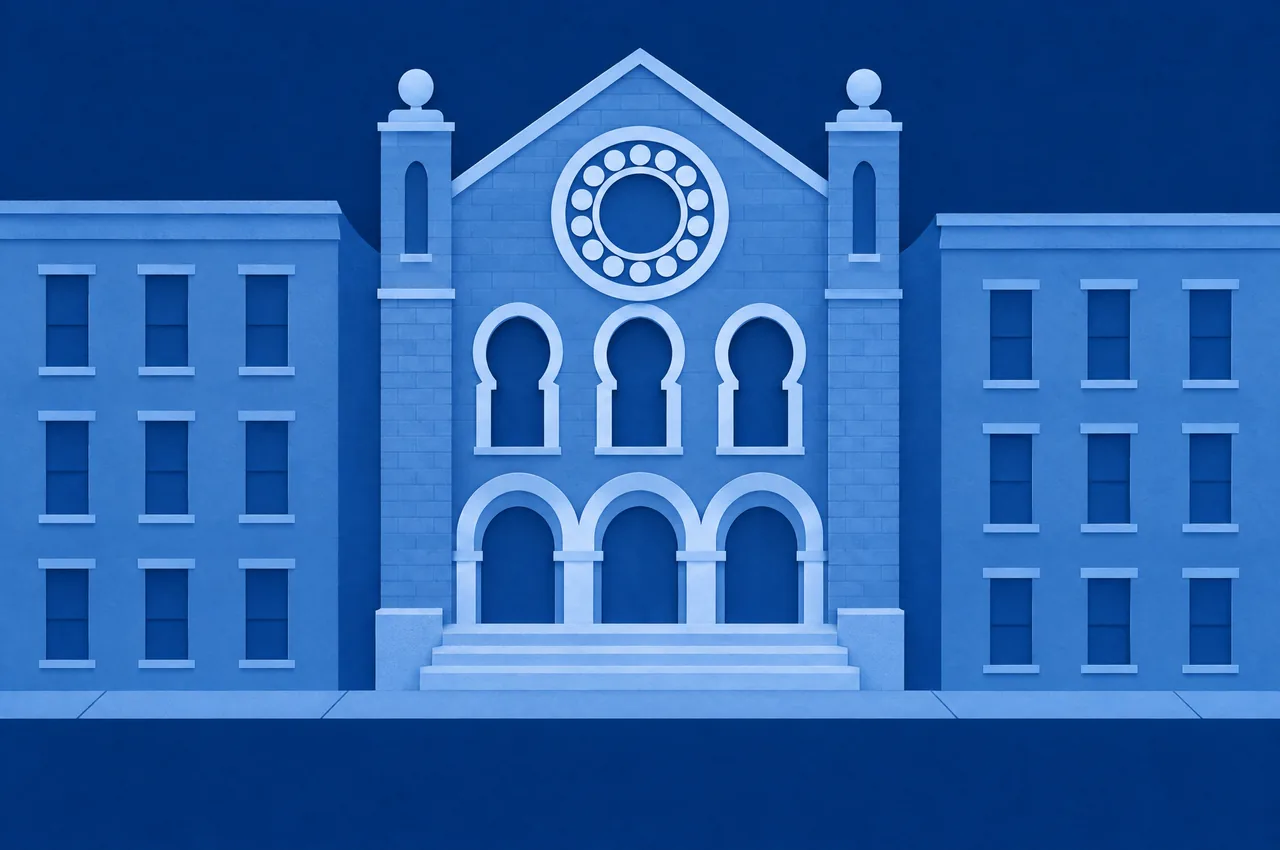
Congregation Kahal Adath Jeshurun built this synagogue in 1886 and 1887, to a design by the brothers Peter and Francis Herter. It was the first purpose-built synagogue in the United States raised by East European Jews, who until then had prayed in converted churches and rented rooms. The front is Moorish Revival: horseshoe arches, a rose window and a stepped roofline above them.
Closed upstairs, open downstairs
The congregation thinned as families moved to Brooklyn, the Bronx and out of the city altogether. By the 1950s the main sanctuary was shut and left to the weather and the pigeons, while the small study room below kept a minyan going. Prayer in the building never actually stopped.
Twenty years of repair
Restoration ran from the mid-1980s to 2007, when the sanctuary reopened. The original east window had been lost long before and replaced with glass block. The round window there now is a Star of David in blue and gold, designed by the artist Kiki Smith with the architect Deborah Gans and installed in 2010. The building is a National Historic Landmark, a museum and a working synagogue at once.
Hebrew for the visit
Phrases
- אֶפְשָׁר לְהִכָּנֵס?efshar lehikanes?May I come in?Ask at the door rather than walking in during prayers. Most communities welcome a respectful visitor.
- אֶפְשָׁר לְקַבֵּל כִּפָּה?efshar lekabel kipa?May I have a kippah?A basket of kippot usually sits by the door. Men and boys cover their heads in almost every synagogue.
- אֵיפֹה עֶזְרַת נָשִׁים?eifo ezrat nashim?Where is the women’s section?Orthodox synagogues seat men and women separately, divided by a mechitza. Conservative, Reform and many other communities seat everyone together.
- זֶה הַבִּקּוּר הָרִאשׁוֹן שֶׁלִּי בְּיִשְׂרָאֵלze habikur harishon sheli beYisraelThis is my first visit to IsraelA reliable opener. Be ready for recommendations, and for someone to insist you visit their own city.
- תּוֹדָה רַבָּהtoda rabaThank you very muchרַבָּה is feminine because תּוֹדָה is a feminine noun. Adjectives always agree with their noun.
Words
- בֵּית כְּנֶסֶתbeit knessetsynagogueLiterally “house of gathering”. The Knesset, Israel’s parliament, shares the root.
- אֲרוֹן קֹדֶשׁaron kodeshthe ark holding the Torah scrollsSet into the wall facing Jerusalem. Everyone stands when it is opened.
- בִּימָהbimathe raised platform for reading the TorahCentral in many Sephardi and traditional Ashkenazi synagogues, at the front in others.
- מְחִיצָהmechitzathe partition separating men and womenStandard in Orthodox synagogues. Conservative, Reform and most Reconstructionist congregations seat men and women together.
- מִנְיָןminyanthe quorum needed for communal prayerTen adults. Orthodox practice counts men; most Conservative and Reform communities count all adults.
- עֲלִיָּהaliyamoving to Israel; being called up to the TorahBoth senses come from “going up”. You go up to the land, and up to the reading desk.
Visiting a Synagogue: all the phrases · All 157 phrases in the phrasebook
Last updated:
OrQuest is coming to iPhone and Android.
One email, when OrQuest reaches the app stores.